Hopp til innholdet

Practical info

Welcome to our digital Tourist Information! We’ve gathered practical tips and answers to the most frequently asked questions to help you plan your visit.

Travel information

Most transportation and tour options in Honningsvåg are coordinated with cruise arrivals and departures. The cruise port is located right in the harbor, and the bus meeting point is only a short walk from the ship. If you have booked a tour, please check your ticket for your assigned meeting location and departure time.

If you are unsure where to go, you are welcome to visit the Tourist Information, located next to the harbor, and we will assist you.

If your ship is delayed, operators usually adjust departure times when possible. For changes or cancellations, please refer to the information provided by your tour operator or cruise line.

Hurtigruten dock in Honningsvåg twice a day, northbound and southbound.
The harbour is located right in the town centre, and you can easily walk to shops, restaurants, and the Tourist Information.

If you want to book a journey starting from Honningsvåg, you must book it directly on the Hurtigruten website by selecting Honningsvåg as your from/to port.

Honningsvåg Airport (HVG) is served by Widerøe with daily flights via Tromsø.
The airport is small and easy to navigate, and it is located about 10 minutes from the town centre by car or taxi.

If you are traveling here during winter, we strongly recommend arriving one or two days in advance.
Weather conditions can affect flights, and having extra time gives you a safer and more relaxed travel experience.

It is also recommended to book your entire journey directly with Widerøe.
If delays or cancellations occur, Widerøe will help coordinate the rest of your trip. If you are connecting to international flights, try to allow at least one extra day between your arrival in Honningsvåg and your long-haul departure.

There is a direct bus service between Honningsvåg and Alta, with three departures per day. The route continues all the way to Alta Airport (ALF), making it a convenient option for travelers connecting to regional or international flights.

The journey crosses mountain areas and open coastline, offering stunning views along the way.
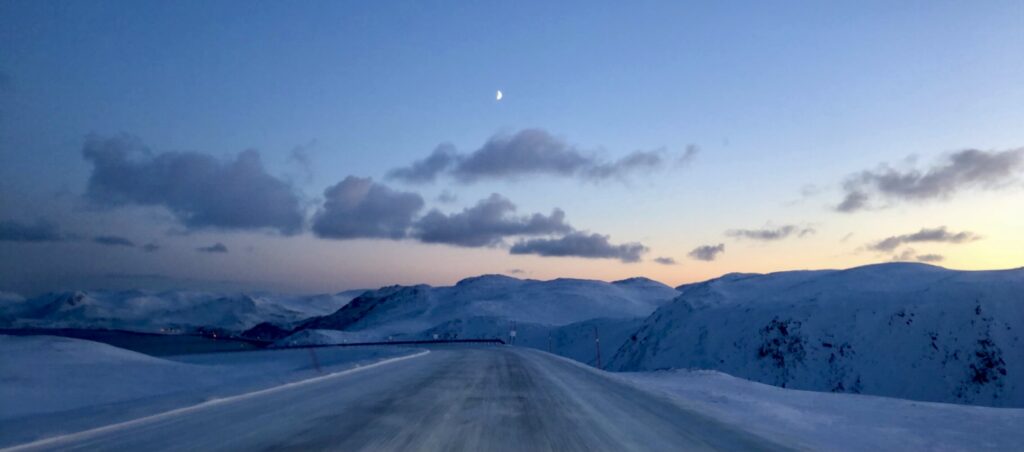
However, during winter, weather conditions can affect the route. In strong winds, heavy snow, or poor visibility, buses may be delayed or canceled, especially over the mountain plateau between Olderfjord and Alta.

We recommend checking the bus schedule and road conditions on the day of travel, and allowing extra time if you are connecting to a flight. You can find more info on snelandia.no

Yes, you can usually bring a bike on the bus between Honningsvåg and Alta, but it depends on available space. Bikes are only accepted if there is room in the luggage compartment, and this cannot be guaranteed—especially during busy travel periods.

We recommend arriving early to increase the chance of securing space. During winter, keep in mind that weather and reduced luggage capacity may affect whether bikes can be transported.

Getting around the island

Yes. The road to the North Cape is normally open from late spring to early autumn.
Summer driving conditions are generally good, but weather in the far north can still change quickly, so we recommend checking road and weather updates before starting your trip.

The drive includes steep sections, wide open plateau areas, and stretches of narrower coastal road.
Take your time, especially in windy or foggy conditions, and watch for reindeer along the route.

Please note: It’s not unusual to see patches of snow on the mountain plateau until early June, but the road itself is generally kept clear and fully drivable.

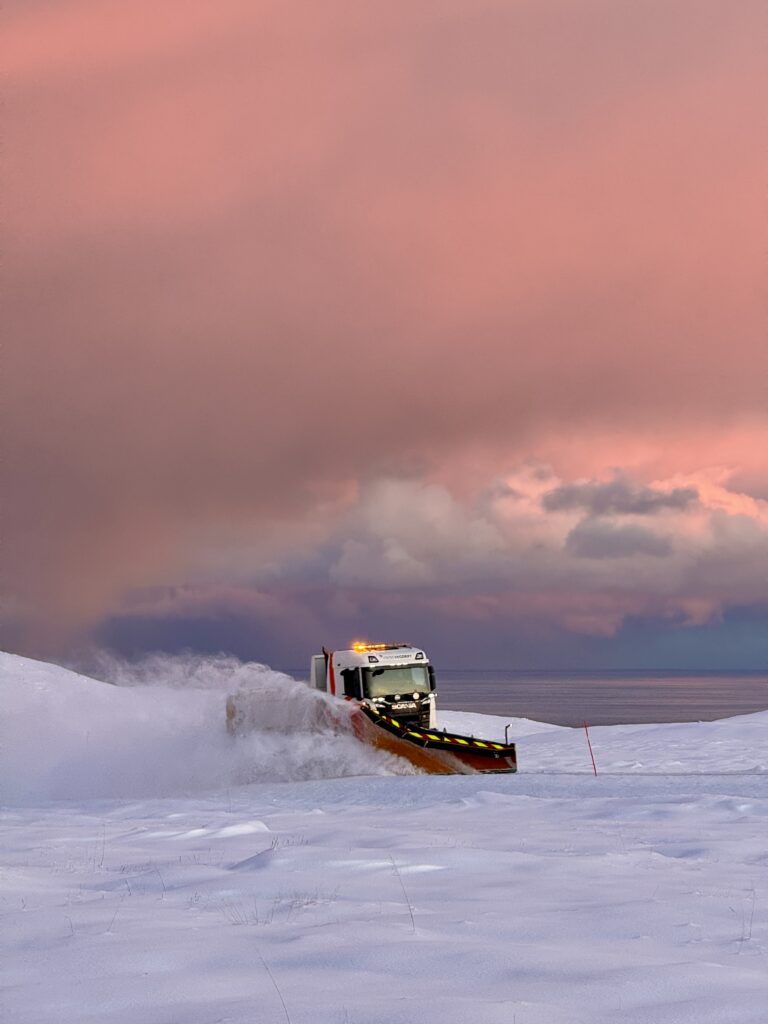
During winter, the road to the North Cape (E69 between Skarsvåg and the North Cape Plateau) may be driven only in scheduled convoys due to weather and safety conditions. This is completely normal for the Arctic winter season.

Convoys are free of charge and no booking is required. A snowplow leads the convoy, and all vehicles follow together to ensure safe travel.

If you plan to drive yourself, make sure your car is equipped for winter conditions (winter tires, warm clothing, food, and a full tank of fuel).

Convoy Departure Times:

From Skarsvåg junction → North Cape:
08:30 • 10:00 • 12:00 • 14:30 • 19:30

From North Cape → Skarsvåg junction:
09:30 • 11:00 • 12:30 (Fridays only) • 13:45 • 16:15 • 21:30

Weather may affect visibility and wind, so convoy schedules can change. Always check road updates before traveling:
• vegvesen.no/trafikk
• or the app “Vegvesen Trafikk”.

If you prefer not to drive, guided tours to the North Cape are available and are scheduled according to convoy times.

Yes. The town center is compact with short walking distances and mostly level terrain.

Road and convoy updates: www.vegvesen.no
Weather forecast: www.yr.no

Yes. Car rental is available in Honningsvåg. We recommend booking in advance, especially in summer.

Yes, local taxi services are available in Honningsvåg.
However, please note that taxis primarily operate within the town centre and surrounding areas. The taxi service is limited and mainly prioritizes essential local transport, such as taking elderly residents to medical appointments.

Because of this, taxis cannot be relied on for trips to the North Cape, and availability may vary depending on the season and daily demand.

Several tour operators offer guided excursions that visit some of the local fishing villages, such as Gjesvær, Skarsvåg, Kamøyvær and Nordvågen. These tours are a convenient way to explore the area and learn about coastal culture and history.

If you prefer to travel on your own, the easiest option is to drive. The villages are connected by well-maintained roads and are within short driving distance of Honningsvåg. If you are visiting during the winter months, remember to check road and weather conditions before driving, as conditions can change quickly in the far north.

You can also travel by Flexx bus (Bestillingstransport). This service must be booked at least 4 hours before departureby calling 75 77 18 88. Availability may vary by season, so booking early is recommended. More info can be found on snelandia.no

Accessibility

Magerøya offers wheelchair-accessible attractions and facilities. The North Cape Visitor Center is fully wheelchair accessible, with step-free access inside the building. In Honningsvåg, both the North Cape Museum and the Ocean Stories experience are also designed to accommodate wheelchair users.

If you plan to join an organized tour, we recommend contacting the tour operator in advance to confirm whether their vehicle has a ramp or lift, as accessibility varies between companies.

If a tour is not able to provide accessible transport, the local car rental company in Honningsvåg has a vehicle equipped with a wheelchair ramp available for booking. This can be a good solution for visiting the North Cape or exploring other parts of the island independently.

Yes, there is a pharmacy in the town center.

Yes. Accessible restrooms are available both in Honningsvåg and at the North Cape.

In Honningsvåg, there is a public accessible restroom located in Sjøgata, close to the town centre and easy to reach on foot.
The North Cape Visitor Center also has restroom facilities, located inside and outside the building.

Weather, nature and Safety

Weather changes quickly in the Arctic. Conditions can shift between clear skies and strong wind in a short period of time. Always check the forecast when planning travel or outdoor activity.

Drone use is regulated due to proximity to Honningsvåg Airport. Always review Norwegian aviation and drone rules before flying.

The road to the North Cape (E69) is well-maintained, but the terrain varies. The drive includes steep sections, stretches of wide, open mountain plateau, and areas with narrower coastal road. During summer, the road is usually in good condition and easy to drive.

Weather in the far north can change quickly, especially on the plateau. Fog, wind, and reduced visibility can occur even in summer, so it’s always smart to check road and weather updates before you start your trip.

In early summer, you may still see patches of snow along the mountain, but the road itself is normally kept clear and fully drivable.

Yes. If you are driving in Northern Norway from late October to early May, your vehicle should be equipped with proper winter tires. Conditions on Magerøya can change quickly, with snow, ice, and strong winds occurring well into spring and returning early in autumn.

Winter tires must have good tread, and studded tires are recommended during the coldest months, especially if you plan to drive to the North Cape or across the mountain plateau.

If you rent a car locally, it will already have the correct seasonal tires fitted.

The convoy is led and supervised by the road authorities, and all vehicles must follow their instructions.

Here’s how it works:

1. Arrive early at the convoy meeting point
A departure time will be announced by the road authorities (Statens Vegvesen). We recommend arriving at least 30 minutes in advance.

2. Follow the convoy leader and keep a steady, safe distance.
Do not overtake, stop, or leave the line of vehicles. They control the speed for everyone’s safety.

3. Use low-beam headlights and keep your hazard lights off.
This ensures visibility without blinding other drivers.

4. Be prepared for reduced visibility, strong winds, and icy roads.
The convoy runs even in challenging conditions, so drive carefully and stay alert.

5. Make sure your car is winter-ready.
You must have proper winter tires, enough fuel, and warm clothing in the car in case of delays.

Convoys are scheduled based on weather and safety assessments by Statens Vegvesen. You can check updated convoy times on their website or by calling the road information service.
Yes. Always check the weather before hiking on Magerøya. Weather conditions can change very quickly in the far north, even during summer.

Thick fog is especially common on the island, and it can reduce visibility to just a few meters. If you are unfamiliar with the terrain, this can make it difficult to stay on the trail or understand where you are. Because of this, we recommend checking the forecast, bringing proper navigation tools, and choosing marked routes whenever possible.

Hiking to Knivskjellodden is generally not recommended during winter. The trail is long, exposed, and crosses open mountain terrain where conditions can become dangerous very quickly. Winter brings strong winds, ice, snow, darkness, and very limited visibility, making navigation difficult even for experienced hikers.

However, it may be possible if you are visiting with an experienced local guide who knows the terrain, understands winter conditions, and can ensure proper safety measures. This should only be done with a professional who is familiar with the area.

For most visitors, the trail should only be attempted during the snow-free season, typically from late spring to early autumn, and only in good weather.

Emergency/Rescue

Call 112 for police, fire, or ambulance.

For urgent medical help, call 113. Local health services are available through the Nordkapp municipality.

Banks and payment

Most places accept credit and debit cards. Cash is rarely needed, you can find the ATM right next to the Tourist information if needed.

The currency is Norwegian Kroner (NOK).

Do you have any other questions?

Please dont hesitate to contact us, we can help in many ways!

Driving in the North Cape region can be a unique experience, especially in winter. Weather can change quickly, and roads may be affected by snow, wind and limited visibility. It is important to plan ahead, drive according to conditions, and check road updates before you travel. During winter (usually November–April), the road between Skarsvåg and the North Cape Plateau may only be accessed in scheduled convoys. A snowplow leads the group to ensure safe travel. Convoys are free, and no booking is required. Rental cars in Norway are normally equipped with winter tires during the winter season, but we still recommend carrying warm clothing, snacks, and a full tank of fuel when traveling in remote areas. For up-to-date road and weather information, use the official sources listed below.

Weather changes quickly in the Arctic. Conditions can shift between clear skies and strong wind in a short period of time. Always check the forecast when planning travel or outdoor activity.

This page is translated with AI. If you have any questions or feedback, please contact us.